
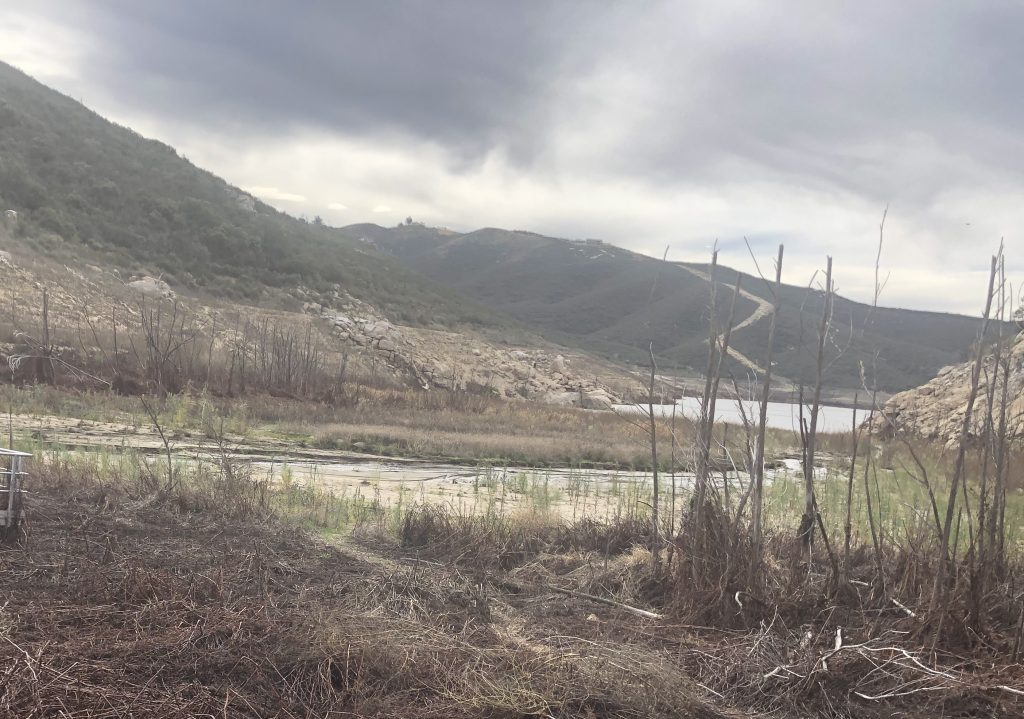
Sweetwater Authority (SWA) board members and general manager continue to attempt to make East County residents seem petty in our efforts to demand better management to Loveland Reservoir, by accusing us of dismissing the importance of drinking water transfers in favor of recreation. Nothing can be further from the truth. SWA simply wants to hide from the real issue: their continued poor management of an important water source.
In response to Manny Delgado and Steve Castenada’s heavily slanted op ed in the Dec 10, 2025, Times of San Diego in which they conveniently leave out SWA’s legal obligations to East County residents regarding Loveland access:
SWA obtained the land surrounding the reservoir in a land swap agreement with the US Forest Service (USFS) in 1997. East County residents did not want to give up their fishing/hiking access and suspected at the time SWA may not honor any commitments to fishing and other recreational access. Ultimately, shoreline fishing access was established to protect existing user rights through a legally binding easement agreement with the USFS. This means SWA is legally bound to honor free access to fishing and hiking. This is not a matter of “goodwill”; this is the legally binding agreement! SWA largely honored this agreement until 2022, when first drained the reservoir, killing wildlife in the reservoir and halting the Fishing Program. As admitted in the op ed, SWA kept the reservoir at a minimum pool level that facilitated shoreline fishing, until about 4 years ago. It is only since Directors Casteneda and Martinez joined the board that SWA has significantly drawn down the reservoir, ignoring the long-established easement and agreement.
The Fishing Program was not just a way to appease East County residents; it was a carefully planned management strategy to keep a healthy water source for South Bay residents. In SWA’s own words: “to protect and preserve water quality and natural habitat…to provide public fishing habitat along a portion of the shoreline.” See previous blog for the whole quote.
Here is what previous SWA general managers and board members understood in developing their long-term strategy:
We have been experiencing a progressively warming atmosphere. This means more water can evaporate into that atmosphere. Sweetwater Reservoir is much shallower and has a significantly larger surface area (about 960 acres) than Loveland Reservoir (~454 acres). Therefore water evaporates at a faster rate in Sweetwater than it does at Loveland. It makes sense to store water in Loveland.
By keeping water in Loveland Reservoir, it maximizes Loveland’s future ability to store water. When water is drained to a significantly low level, exposed soils and surrounding plants lose more water which means there is less ground water. Invasive plants, such as mustard and horseweed, move in which outcompete native plants by sopping up ground water, further drying out the soils. Therefore, with the next rain, less water is stored because more water will be absorbed by the dry soils, and with the next draining, this happens again, causing a positive feedback system of more drying and less water storage capacity. SWA’s water current water management practice is drying out the valley, ultimately making less water available to South County residents and increasing the wildfire risk in the valley. And looking ahead, all weather predictions indicate a dry winter. Mr. Delgado and Mr. Casteneda claimed that November was the “wettest November in recent memory”. According to NOAA, November saw between 1.7” and 2” of rain in the area around Loveland. Three years prior, it experienced 2.35”. That is not a lot of rainfall! So why drain Loveland when data points to a dry winter that may not refill the reservoir! This shows that SWA needs to get their act together with accurate data driven management practices.
The genius of the 1997 SWA General Manager’s and board members’ Loveland management plan was simple: guarantee a long-term supply of free water to their customers by protecting the environment that contains their resource. And what’s an easy way to monitor a healthy environment? Provide a Fishing Program! Fish are an excellent indicator of a working ecology: if healthy fish can be caught by local residents, then the ecological system is working, which means water will be available for South County residents for many years to come. This agreement was a win-win: continuous available water transfers for SWA to a level that provides continued recreational and subsistence fishing to East County residents.
But keep draining the reservoir? SWA’s actions will dry it out, and the valley will become a tinderbox, thereby killing the goose that’s laying the golden eggs. This type of irresponsible drying of watersheds has occurred countless times around the world, which will be the subject of the next blog.
